When considering dock leveler equipment, many people ask, "What is the lifespan of dock leveler equipment?" This question is crucial for facility managers and warehouse operators. Understanding lifespan can help in budget planning and maintenance schedules. Typically, dock levelers are expected to last between 10 to 20 years, depending on usage and maintenance.
However, it’s important to note that various factors influence this longevity. The frequency of use, the type of materials being handled, and environmental conditions all play a role. Frequent heavy loads and harsh conditions can significantly shorten the lifespan. Regular inspections and prompt repairs are also key to extending service life.
Investing in high-quality equipment and establishing a proactive maintenance plan can prevent premature failures. It may feel daunting to manage these factors, but addressing them early can save costs in the long run. Remember, dock levelers are essential for efficiency. Their failure can disrupt operations, so understanding their lifespan is vital. Making informed decisions today sets the foundation for optimal performance tomorrow.
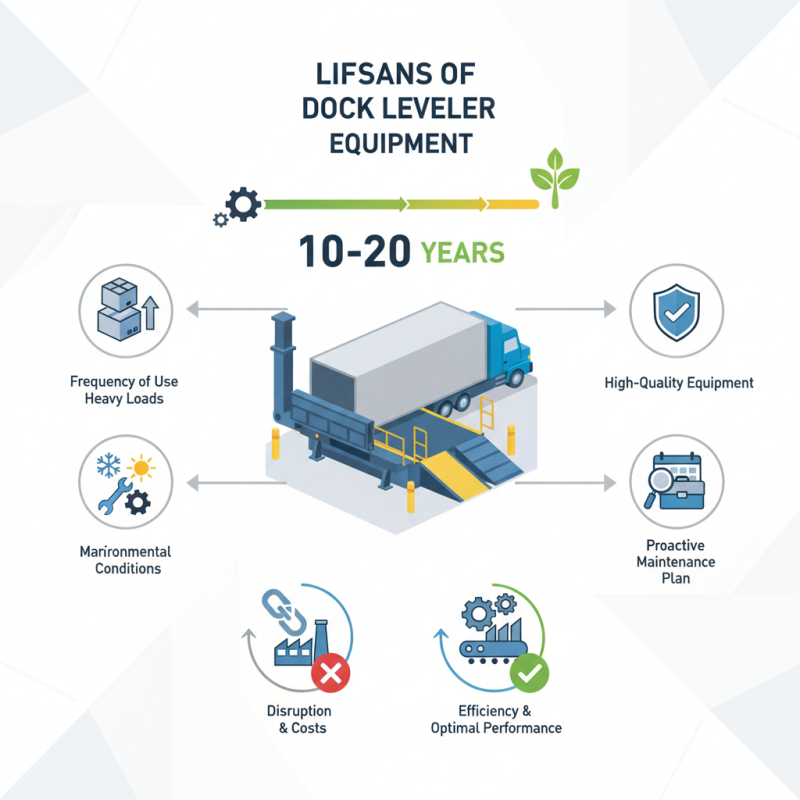
Dock leveler equipment is essential for efficient loading and unloading. However, understanding the factors affecting their lifespan is crucial. Various elements contribute to how long this equipment can last.
One significant factor is the environment. Exposure to harsh conditions, like extreme temperatures or moisture, can lead to wear and tear. Regular maintenance is vital. A well-maintained dock leveler can last longer. Inspecting joints, seals, and the surface regularly can prevent major issues.
Tip: Schedule routine checks every six months. Look for signs of rust or damage. Early detection can extend lifespan considerably.
The quality of use also plays a role. Overloading the dock leveler or improper usage can shorten its lifespan dramatically. Training staff on proper handling techniques is essential. They should know the equipment's limits.
Tip: Use weight limits displayed on the equipment. Educate your team on the importance of following these guidelines. Proper guidance can prevent accidents and prolong equipment life.
This chart illustrates the average lifespan of different types of dock leveler equipment in years. Steel levelers tend to have a lifespan of approximately 15 years, while aluminum levelers can last up to 20 years. Hydraulic and mechanical levelers show varying lifespans, with hydraulic levelers lasting around 12 years and mechanical ones about 18 years. Edge-of-Dock levelers have the shortest lifespan, averaging around 10 years.
When it comes to dock levelers, understanding their lifespan is crucial. Different types of dock levelers have varying durability and maintenance needs. Generally, mechanical levelers last around 10-15 years. However, factors like usage frequency and maintenance can impact this range significantly. Regular inspections can help identify wear and tear early, potentially extending their life.
Hydraulic levelers typically enjoy a longer lifespan, often reaching 15-20 years with proper care. Yet, they require more complex maintenance. The hydraulic fluid must be inspected regularly. Over time, components may wear out, leading to costly repairs. A well-maintained system can still experience unexpected failures, prompting the need for continuous evaluation.
It's important to acknowledge that even the best equipment can fall short at times. Poor installation can lead to premature issues. Operators should be trained on proper handling to avoid misuse. An investment in dock levelers should also include a reliable service plan to address potential problems before they escalate. Evaluating the expected lifespan and planning for maintenance can significantly enhance overall efficiency.
| Type of Dock Leveler | Expected Lifespan (Years) | Maintenance Requirements | Common Usage Scenarios |
|---|---|---|---|
| Mechanical Dock Leveler | 10-15 | Regular lubrication and inspection | Warehouses, Distribution Centers |
| Hydraulic Dock Leveler | 15-20 | Annual maintenance checks, fluid replacement | High-traffic loading areas |
| Pneumatic Dock Leveler | 8-12 | Check air pressure and seals regularly | Food and Beverage Industry |
| Container Dock Leveler | 10-15 | Inspect wear and tear, adjust as needed | Shipping and Port Operations |
| Edge-of-Dock Leveler | 10-15 | Minimal, mainly visual inspections | Low-volume docks |
To ensure the longevity of dock levelers, regular maintenance is crucial. A recent report by the Material Handling Industry indicates that up to 70% of equipment failures occur due to insufficient upkeep. Simple practices, like inspecting seals and hydraulic systems, can prevent costly breakdowns. A routine check every quarter can highlight issues before they escalate. This proactive approach allows for longer lifespans, often extending usage by five to ten years.
Another vital aspect involves cleaning the levelers regularly. Dirt and debris can hinder performance, leading to malfunctions. According to industry studies, clean equipment operates 30% more efficiently. Users frequently overlook this step, reflecting a need for better training. Having a dedicated team or individual responsible for maintenance can alleviate this issue.
Lastly, keeping proper documentation of all maintenance activities is essential. Accurate records help identify patterns in equipment performance. They can reveal that certain parts wear out faster than expected. This insight allows for informed decisions about replacements and repairs. The lack of documentation by many operators leads to missed opportunities for improvement. Recognizing these shortcomings is just as important as implementing robust maintenance practices.
When assessing the need for dock leveler replacement, certain signs can highlight potential issues. Cracks in the leveler surface or frame are clear indicators of wear. Over time, daily use can lead to these structural damages, impacting performance. A recent industry report found that 30% of dock levelers show signs of deterioration within five years of use.
Other critical signs include inconsistent or inaccurate leveling. If the leveler no longer maintains its position, it may cause operational delays. This inconsistency can lead to safety hazards, including worker injuries and product damage. The National Institute for Occupational Safety and Health indicates that poor dock conditions contribute to 25% of warehouse accidents.
Another aspect to consider is the noise level during operation. Excessive noise might indicate mechanical failure or wear. Regular inspections can help identify such issues early, potentially extending the equipment's usable life. Industry experts suggest that timely replacement can save costs in the long run, highlighting the need for proactive maintenance. Regular evaluation is essential for safe and efficient operations.
Upgrading dock leveler equipment can be a significant investment. However, it can also yield substantial benefits. The equipment's lifespan is crucial. Old dock levelers may require frequent repairs. These costs can add up quickly. Additionally, outdated equipment may slow down operations, impacting productivity. Analyzing these factors is essential before making a decision.
Cost-benefit analysis involves evaluating long-term savings versus upfront costs. Newer dock levelers often come with enhanced safety features. They can handle heavier loads with greater efficiency. Energy savings may also be a factor. Energy-efficient models reduce electricity consumption. This can lead to a decreased operational cost over time. While initial expenses may be high, the return on investment can be significant.
Yet, not every upgrade is worth the cost. Some facilities may find that their current levelers suffice for their needs. Regular maintenance could extend the life of older models. This requires careful evaluation. Businesses should assess their unique requirements. Balancing costs and operations is key to making informed decisions.
: The environment, maintenance, and quality of use influence lifespan significantly. Harsh conditions can cause wear and tear.
Schedule routine checks every six months. Look for signs of rust or surface damage during inspections.
Well-maintained equipment lasts longer. It prevents major issues from developing and reduces repair costs.
Overloading or misuse can drastically shorten their lifespan. Training staff on handling techniques is vital.
They should follow weight limits displayed on the equipment. This helps prevent accidents and prolongs equipment life.
Upgrading can enhance safety and efficiency. However, businesses must evaluate their unique needs before making a decision.
These models reduce electricity consumption. This leads to lower operational costs over time.
It evaluates long-term savings against upfront costs. This helps determine if an upgrade is worthwhile.
Some facilities may find their current models meet their needs. Regular maintenance can also extend their lifespan.
Balancing costs and operational efficiency is essential. Assessing unique requirements is crucial for informed decisions.
The lifespan of dock leveler equipment is influenced by various factors including usage frequency, environmental conditions, and the type of materials used in their construction. Different types of dock levelers come with varying expected lifespans; for instance, hydraulic levelers may last longer than manual ones due to their robust design. To ensure longevity, implementing regular maintenance practices such as inspections, lubrication, and prompt repairs is essential.
Recognizing signs that indicate the need for replacement is crucial to avoid operational delays. Additionally, conducting a cost-benefit analysis may reveal the advantages of upgrading dock leveler equipment, potentially leading to enhanced efficiency and safety. Understanding what is the lifespan of dock leveler equipment can help businesses make informed decisions about maintenance and upgrades.

Spare PartPro