Loading docks are busy, unforgiving work areas. Forklifts move quickly. Trailers shift without warning. A damaged dock leveler can turn a routine shipment into a serious incident within seconds. The central question is simple: how to prevent equipment failure in loading docks before it interrupts operations?
According to dock-safety consultant Rick Harris, “A dock is only as safe as its last inspection.” This practical warning should guide every maintenance program. Teams should inspect levelers, vehicle restraints, dock lights, bumpers, seals, hydraulic lines, and control panels before each shift. Look for unusual noise, uneven movement, cracked welds, oil stains, and loose fasteners. Small clues matter.
Preventive maintenance also needs accurate records. Note the equipment number, inspection time, defect, repair, and responsible technician. Replace worn components before they fail under load. Train operators to report strange vibration or delayed movement immediately. Do not treat a warning light as a minor inconvenience. It may signal a deeper electrical or hydraulic problem.
No plan catches everything. That is the uncomfortable truth. Even reliable equipment can fail during rain, cold mornings, or heavy peak-season traffic. Therefore, managers should review breakdowns honestly. Was the inspection rushed? Was a spare part delayed? Did production pressure influence the decision? These questions may feel inconvenient, but they reveal weak points. A safer dock is built through disciplined checks, qualified repairs, and continuous learning—not luck.
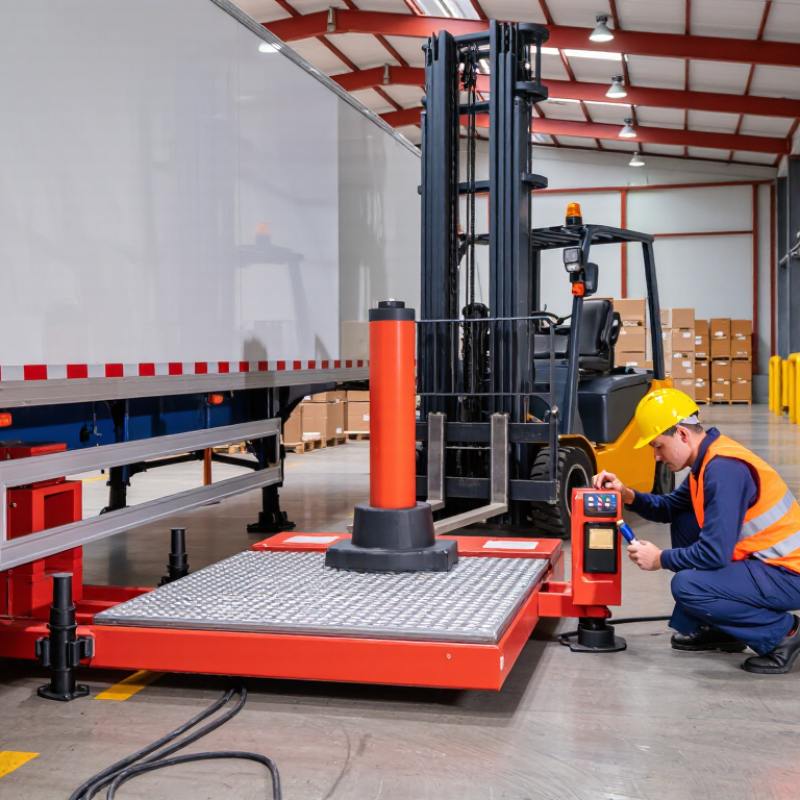
Understand Common Causes of Loading Dock Equipment Failure
Loading dock equipment usually fails through neglect, not sudden bad luck. Damaged dock levelers, worn hinges, leaking hydraulic lines, and broken vehicle restraints are common warning signs. OSHA identifies falls, struck-by incidents, and caught-between hazards as major loading dock risks. A failed restraint can let a trailer move while a forklift is crossing the dock plate. That movement may be only a few inches. It is still dangerous.
Moisture and dirt accelerate corrosion around dock plates, bumpers, and control panels. Heavy forklifts also create repeated impact damage when drivers approach too quickly. FM Global property loss guidance recommends inspecting dock equipment, vehicle restraints, and fire protection systems as part of planned maintenance. The Liberty Mutual 2024 Workplace Safety Index estimated that falls on the same level cost employers billions of dollars in 2022. Those figures are not dock-specific, but they show how small maintenance failures become expensive injuries.
A practical inspection should check hydraulic pressure, warning lights, safety lips, bumpers, and emergency stops before each shift. Record defects with photographs, not vague notes like “needs attention.” Maintenance intervals should reflect traffic, weather, and load weight. A quiet dock is not necessarily a safe dock. Some teams replace visible parts while ignoring damaged mounting points beneath them. That shortcut deserves a second look.
How to Prevent Equipment Failure in Loading Docks?
Common failure risks are ranked using a practical risk-priority score based on likelihood and operational impact. Preventive inspections should focus first on high-scoring conditions such as damaged dock levelers, hydraulic leaks, poor lubrication, and worn restraints.
Recommended controls include daily visual checks, scheduled lubrication, hydraulic-system inspections, replacement of worn components, and verification that vehicle restraints and safety interlocks operate correctly. Risk categories reflect common loading-dock maintenance conditions described in OSHA loading-dock safety guidance.
Establish a Routine Inspection and Preventive Maintenance Plan
Equipment failure at a loading dock rarely begins with a dramatic break. It often starts with a slow hydraulic leak, loose hinge, or damaged warning light. A routine inspection plan makes these small signals visible. Assign a trained employee to inspect each dock before the first truck arrives. Record the date, dock number, operating condition, and corrective action. Keep records in a shared log, not scattered paper forms.
Daily checks should cover the leveler, restraint system, bumpers, seals, controls, and surrounding floor. Look for cracked welds, frayed cables, unusual noise, oil, and standing water. Test movement without placing anyone in a hazardous position. Stop use when a safety-critical defect appears. A supervisor should verify the finding and arrange qualified repairs. Preventive maintenance must follow service intervals and actual site conditions. Lubricate approved points, tighten fasteners, inspect electrical connections, and replace worn parts before failure. Small details matter.
Review the log weekly for repeated faults. Repeated faults deserve investigation, not another quick reset. Check whether traffic volume, weather, or operator habits are adding stress. Training should include safe reporting and clear escalation rules. We once treated a recurring alignment problem as minor; it later disrupted scheduling and required extra work. That experience changed our plan. Inspections need time, ownership, and honest records. A checklist alone cannot maintain a dock. It can be incomplete. Review it after near misses, equipment changes, and seasonal weather shifts.
Operate Dock Equipment Safely and Within Its Rated Capacity
Loading dock equipment fails when daily pressure exceeds its rated capacity. A forklift may lift the load, but the dock leveler must also support the combined weight of the vehicle and cargo. Check the capacity plate before each shift. Include pallets, attachments, and uneven weight in your calculation. Never treat a small overload as harmless. Small errors matter. Inspect hinges, lips, restraints, and hydraulic lines for cracks, leaks, or unusual movement. Stop operation when equipment behaves differently.
Tips:
Keep the working area dry, clean, and well lit. Center loads before crossing the dock leveler. Approach slowly, with the forks low and the load stable. Keep pedestrians outside the marked danger zone. Operators should receive practical training, not just a signed form. Record damage immediately, even when production is busy.
Safe operation also depends on communication. Drivers should confirm trailer position before loading begins. A visible signal or radio call can prevent sudden movement. Use wheel restraints or approved systems correctly, and verify engagement rather than assuming it. Maintenance personnel should follow the equipment manual and inspect after abnormal impacts. Some failures develop quietly. That is easy to overlook. Supervisors should review near misses, because a routine shortcut today can become a costly breakdown tomorrow. In practice, rated capacity is not a target; it is a firm operating boundary.
Document Maintenance Activities and Improve Equipment Reliability
Equipment failure at a loading dock rarely begins with a dramatic breakdown. It often starts with a door closing two seconds slower, a dock leveler shuddering, or a warning light ignored during a busy shift. Documenting these small changes gives maintenance teams usable evidence instead of guesswork.
Record each inspection immediately. Include the date, equipment ID, operating hours, observed symptom, safety controls, corrective action, and technician name. A photo of a frayed cable or hydraulic leak can clarify the report. Note conditions too, such as rain, cold temperatures, heavy loads, or unusual noise. These details help identify repeating patterns. Short records matter.
Use the log to schedule lubrication, inspections, part replacement, and functional tests according to actual usage. Review open work orders weekly with operations staff. They often notice intermittent faults that a technician misses during a brief visit. However, documentation is not automatically accurate. Handwritten notes can be vague, and rushed entries may hide uncertainty. Mark assumptions clearly and verify them during the next inspection. A missed follow-up can weaken an otherwise strong maintenance program. Keep training records, calibration evidence, and incident reviews with the equipment history. This creates traceability and supports responsible decisions when repair, adjustment, or replacement is needed.
How to Prevent Equipment Failure in Loading Docks? - Document Maintenance Activities and Improve Equipment Reliability
Loading Dock Equipment Maintenance and Reliability Record
| Equipment |
Location |
Inspection Date |
Observed Condition |
Maintenance Activity |
Frequency |
Downtime |
Risk Level |
Next Due |
| Dock Leveler |
Bay 01 |
2026-01-08 |
Hydraulic movement was slow; minor oil residue found near the cylinder seal. |
Checked fluid level, cleaned the area, replaced the seal, and tested the full operating cycle. |
Monthly |
45 min |
Medium |
2026-02-08 |
| Dock Shelter |
Bay 02 |
2026-01-12 |
Side curtain showed abrasion and a 180 mm tear near the lower edge. |
Patched the damaged section, checked frame alignment, and recorded curtain wear for trend monitoring. |
Quarterly |
20 min |
Low |
2026-04-12 |
| Vehicle Restraint |
Bay 03 |
2026-01-19 |
Locking sensor intermittently failed to confirm trailer engagement. |
Cleaned sensor housing, tightened connections, verified warning lights, and completed five engagement tests. |
Weekly |
60 min |
High |
2026-01-26 |
| Dock Door |
Bay 04 |
2026-02-03 |
Door travel was uneven; guide track contained dust and loose fasteners. |
Cleaned and lubricated guide tracks, tightened fasteners, and checked door balance and limit switches. |
Monthly |
35 min |
Medium |
2026-03-03 |
| Dock Bumper |
Bay 05 |
2026-02-10 |
Rubber bumper was compressed beyond its normal profile and mounting bolts were worn. |
Replaced bumper and mounting hardware; inspected wall plate for deformation. |
Quarterly |
90 min |
Medium |
2026-05-10 |
| Hydraulic Power Unit |
Bay 06 |
2026-02-17 |
Fluid appeared dark; filter differential pressure was approaching the service limit. |
Changed hydraulic filter and fluid, inspected hoses, and recorded operating pressure before and after service. |
Every 6 months |
75 min |
High |
2026-08-17 |
| Dock Control Panel |
Bay 07 |
2026-03-02 |
Emergency-stop button required excessive force during functional testing. |
Replaced emergency-stop switch, tested control circuits, and documented reset and alarm functions. |
Monthly |
40 min |
High |
2026-04-02 |
| Dock Lighting |
Bay 08 |
2026-03-11 |
One overhead fixture was flickering, reducing visibility during trailer loading. |
Replaced the lamp and checked electrical connections, illumination, and protective cover condition. |
Monthly |
25 min |
Medium |
2026-04-11 |
| Wheel Guide |
Bay 09 |
2026-03-18 |
Guide surface was loose and showed impact damage from repeated trailer contact. |
Reset and anchored the guide, repaired damaged concrete, and added a weekly visual check. |
Weekly |
120 min |
Medium |
2026-03-25 |
| Dock Door Seal |
Bay 10 |
2026-03-25 |
Bottom seal was hardened and had a visible gap when the door was closed. |
Replaced the seal, adjusted door clearance, and verified weather protection around the trailer opening. |
Quarterly |
50 min |
Low |
2026-06-25 |
Recorded Downtime
8.7 hours
Preventive Maintenance Compliance
96%
Conclusion
Learning how to prevent equipment failure in loading docks starts with understanding the most common causes, including overloading, poor operating practices, worn components, contamination, and neglected maintenance. A routine inspection and preventive maintenance plan can identify problems early by checking dock levelers, restraints, doors, hinges, hydraulic systems, safety controls, and structural components. Equipment should always be operated by trained personnel, used only for its intended purpose, and kept within its rated capacity to reduce unnecessary stress and damage.
Warning signs such as unusual noises, leaks, unstable movement, damaged parts, or inconsistent performance should be repaired before they develop into serious failures. Keeping accurate records of inspections, repairs, replacement parts, and recurring issues also helps maintenance teams recognize patterns and improve reliability over time. With disciplined inspections, safe operation, timely repairs, and thorough documentation, businesses can reduce downtime, protect workers, extend equipment service life, and maintain a more dependable loading dock.

 Spare PartPro