When choosing between hydraulic and mechanical dock systems, many ask, "what is the difference between hydraulic and mechanical dock systems?" Understanding these differences is crucial for selecting the right system for your needs. Hydraulic dock systems utilize fluid power, while mechanical systems rely on gears and levers.
Hydraulic systems often offer smoother operation and greater capacity. They can lift heavier loads effortlessly. However, they can be more expensive and require maintenance. Mechanical systems, on the other hand, are often more cost-effective and simpler to repair. Their operation can be noisier, which is an important consideration for some facilities.
Each option has its pros and cons, making the decision complex. Users must weigh efficiency, cost, and maintenance. Also, factors like load requirements and dock usage frequency play a role. Ultimately, the choice should reflect both immediate needs and long-term operational goals.
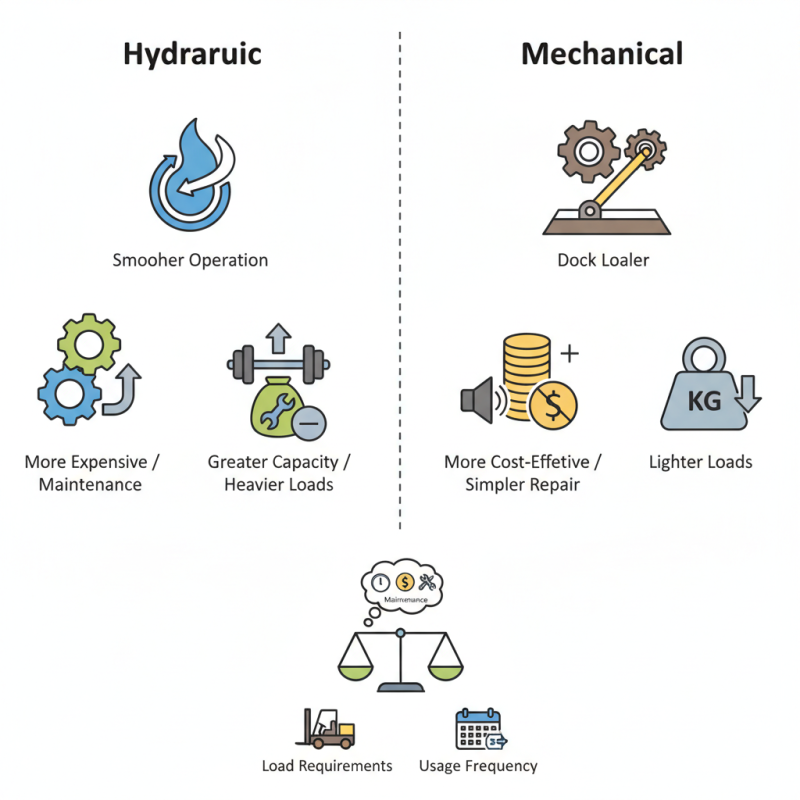
Key Characteristics of Hydraulic Dock Systems
Hydraulic dock systems are widely used in various industries. Their key characteristics set them apart from mechanical options. One significant advantage is their smooth operation. Hydraulic mechanisms allow for precise adjustments. This is crucial when handling different loads. Their design minimizes wear and tear, enhancing longevity.
Another notable feature is the ability to handle heavy loads with ease. Hydraulic systems can lift substantial weights, accommodating large vehicles and cargo. This efficiency can lead to reduced loading and unloading times. Additionally, they provide a level of safety not always found in mechanical systems. A sudden overload can cause mechanical docks to fail, while hydraulic systems often include fail-safes.
However, hydraulic systems are not without their flaws. They require routine maintenance to prevent leaks. Neglecting this could result in costly repairs. Furthermore, the complexity of hydraulic components sometimes confuses operators. Training becomes essential to ensure safety and efficiency. Like any system, understanding both strengths and weaknesses is key to making informed choices.
Key Characteristics of Mechanical Dock Systems
Mechanical dock systems offer unique features that make them suitable for various applications. These systems utilize a series of gears, levers, and mechanical components to operate. They are often praised for their simplicity and effectiveness. Operators can easily control the loading and unloading of cargo without complications.
One key characteristic is their robust construction. Mechanical docks can handle heavier loads, making them ideal for industrial use. They can also be more cost-effective in the long run, reducing maintenance expenses. However, this simplicity may lead to challenges in repairs. If a component fails, it can cause significant downtime. Operators need to be aware of these potential issues and plan accordingly.
Furthermore, mechanical dock systems do not rely on hydraulic fluids, which can leak and create safety hazards. This makes them safer in specific environments. Yet, balancing performance with reliability can create ongoing dilemmas. It often requires operators to weigh the initial cost against long-term benefits. Overall, understanding these characteristics is vital for making informed choices in dock system selection.
Comparison of Operational Efficiency: Hydraulic vs Mechanical
When comparing hydraulic and mechanical dock systems, operational efficiency plays a key role in their advantages. Hydraulic systems utilize fluid power, delivering smooth and quick movements. They excel in heavy lifting, making them suitable for busy ports. The seamless operation reduces the chances of mechanical failure. However, this system can be complex, requiring regular maintenance to avoid leaks and pressure issues.
On the other hand, mechanical dock systems rely on direct mechanical action. These systems are often simpler and more robust. They can handle a range of tasks effectively but may lack the speed of hydraulic systems. Mechanical systems are easier to maintain, which can be a significant advantage in ports with limited technical staff. However, their lifting capacity may be lower compared to hydraulics, especially for larger loads.
Understanding these differences is crucial for operators. A well-informed choice can lead to improved efficiency and productivity at the dock. Each system has its strengths and drawbacks. Regular assessments of specific operational needs can guide the decision toward the most suitable system. Evaluating the existing infrastructure is vital too, as what works for one may not work for another.
Top 10 Differences Between Hydraulic and Mechanical Dock Systems
| Feature |
Hydraulic Dock Systems |
Mechanical Dock Systems |
| Operating Mechanism |
Uses hydraulic fluid to operate |
Uses mechanical components like gears |
| Speed of Operation |
Generally faster |
Slower in comparison |
| Maintenance Requirements |
Requires regular fluid checks |
Less frequent maintenance |
| Energy Efficiency |
Higher efficiency under load |
Less efficient under heavy loads |
| Cost |
Typically more expensive |
Generally more affordable |
| Durability |
High durability with proper maintenance |
Durability may vary by design |
| Noise Level |
Generally quieter operation |
May produce more noise |
| Load Capacity |
Higher load capacities available |
Limited to mechanical constraints |
| Installation Complexity |
Requires specialized installation |
Relatively easy to install |
| Safety |
Risk of hydraulic leaks |
Mechanical failures possible |
Maintenance Requirements for Hydraulic and Mechanical Systems
Maintenance is crucial for both hydraulic and mechanical dock systems. Hydraulic systems require regular fluid checks and monitoring for leaks. According to the American Society of Mechanical Engineers, up to 30% of hydraulic system failures stem from poor maintenance practices. Keeping hydraulic fluid clean and at the proper level is essential. Neglecting these aspects can lead to significant downtime and expensive repairs.
Mechanical dock systems, on the other hand, often involve less complex maintenance. However, they still require consistent inspections of moving parts. A report by the International Docking Industry Association indicates that 20% of mechanical system failures are due to overlooked wear and tear. Regular lubrication can prevent most of these issues, yet many facilities fail to schedule these crucial tasks. This oversight may create risks that affect overall productivity.
Despite their differences, both systems need tailored maintenance plans. It’s not uncommon to see maintenance schedules inadequately followed. Facilities must prioritize training staff on the unique needs of each system. Doing so can lead to impressive efficiency improvements and a longer lifespan for the dock systems. Ignoring these elements can ultimately cost more than anticipated.
Cost Analysis: Initial and Long-Term Expenses of Both Systems
When considering hydraulic and mechanical dock systems, cost analysis plays a crucial role. The initial investment for hydraulic systems tends to be higher. This is due to sophisticated components and technology. Specialized installation is often required, adding to the upfront cost. In contrast, mechanical dock systems typically have a lower initial expense. They are easier to install, with less specialized equipment needed.
Long-term expenses reveal a different picture. Hydraulic systems may require occasional maintenance. They depend on hydraulic fluids, pumps, and seals, which can wear over time. Budgeting for these costs is vital. Mechanical systems, while cheaper initially, might incur higher maintenance costs. Mechanical components can suffer more wear and tear due to constant use.
Moreover, both systems have operational costs tied to energy use. Hydraulic systems usually consume more power. In contrast, mechanical docks often have a streamlined operation, which can lower electricity bills. Properly weighing both initial and long-term expenses helps in making an informed decision.
FAQS
: Mechanical dock systems are known for their simplicity, effectiveness, and robust construction for handling heavier loads.
They often require less maintenance, which can lead to reduced long-term expenses. However, repairs can cause downtime.
Hydraulic systems need regular fluid checks and leak monitoring. Poor maintenance can lead to failures and expensive repairs.
Up to 20% of failures stem from overlooked wear and tear. Regular inspections and lubrication are often neglected.
They do not use hydraulic fluids, reducing the risk of leaks and safety hazards in various environments.
Balancing performance and reliability can be tough. Operators must weigh initial costs against long-term benefits.
Neglecting maintenance can lead to significant downtime and increased costs. Regular schedules for both systems are essential.
Training staff on specific maintenance needs can enhance efficiency and extend the lifespan of dock systems.
Many facilities inadequately follow maintenance schedules, leading to risks and ultimately higher costs.
Operators must understand system characteristics and maintenance needs to make informed choices in selecting a dock system.
Conclusion
The article "Top 10 Differences Between Hydraulic and Mechanical Dock Systems" explores the key characteristics, operational efficiency, maintenance needs, and cost implications associated with hydraulic and mechanical dock systems. Hydraulic dock systems are typically praised for their smooth operation and ability to handle heavy loads, while mechanical systems are often noted for their simplicity and reliability.
When it comes to maintenance, hydraulic systems may require more regular servicing due to their complex mechanisms, whereas mechanical systems generally have lower upkeep demands. Additionally, a thorough cost analysis reveals that while hydraulic systems may present higher initial expenses, they can offer long-term savings under certain operations. Overall, understanding what is the difference between hydraulic and mechanical dock systems is crucial for making an informed choice based on specific operational needs and budget considerations.

 Spare PartPro