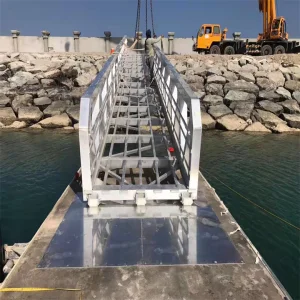
Factory-direct hydraulic dock levelers, mobile loading bridges, marina gangways, and fixed boarding bridges engineered for Siberian cold, heavy freight, rapid warehouse turnover, and project-specific procurement.
These four factory-direct configurations are the first selection layer for buyers comparing adjustable height, hydraulic loading, lake access, and warehouse ramp solutions in Novosibirsk and the wider Siberian Federal District.


Semantic-search note: In Novosibirsk, buyers often combine transactional terms such as “adjustable dock bridge supplier” with application terms such as “warehouse ramp,” “hydraulic dock leveler,” “mobile loading bridge,” and “lake floating bridge.” The product links above preserve the original catalogue URLs while adding local application context for procurement teams.
A supplier page for Novosibirsk cannot succeed by repeating “factory” and “price.” It must answer the questions behind the query: Will the bridge handle Siberian winter conditions? How is the right model selected? What documentation, installation support, and spare-part path exist after delivery?
A Novosibirsk procurement search is rarely only “buy a loading bridge.” It usually contains a hidden operational brief: dock height, truck deck height, trailer fleet, load capacity, pit availability, indoor or outdoor use, ambient temperature, voltage, and the required safety level. We therefore structure the page around application intent, engineering intent, commercial intent, and after-sales intent rather than a single keyword.
The extra value comes from connecting product choices to real local conditions: snow and ice management, low-temperature hydraulic review, anti-slip surfaces, drainage at pit levelers, modular shipping to Siberia, and a total-cost-of-ownership view. This is the practical meaning of information gain for an industrial SEO page: give buyers a decision framework they cannot get from a thin catalogue.
E-E-A-T principle: Experience is demonstrated by application detail; expertise by engineering criteria; authoritativeness by factory and documentation transparency; reliability by spare-part thinking, inspection points, and realistic lead-time language. Certification and compliance claims should always be confirmed against the exact model, configuration, and importer requirements.
Novosibirsk is not a generic destination on an export map. It is the largest city in Siberia, a major scientific and industrial center, and a transport node connecting European Russia, the Urals, Central Asia, and the Russian Far East.
Novosibirsk sits on the Trans-Siberian Railway corridor and is served by Tolmachevo Airport, federal highway links, and a dense regional road network. For warehouse operators, this means mixed freight profiles: palletized retail goods, e-commerce parcels, industrial components, food products, construction materials, and cross-dock transfers.
The city and Novosibirsk Oblast support machine-building, food processing, energy equipment, metallurgy, construction, logistics services, and a strong science and technology cluster. This creates demand for loading dock systems in factories, distribution centers, cold stores, utility yards, and temporary project sites.
Sustained sub-zero periods, snow, ice, freeze-thaw cycles, and road salt exposure influence material selection, hydraulic oil choice, seal quality, surface treatment, drainage, control protection, and maintenance planning. A standard warm-climate dock bridge may physically fit but still underperform if these details are ignored.
For a Novosibirsk warehouse, the dock is not simply a steel plate between a truck and a building. It is the control point for loading speed, forklift safety, trailer stability, heat loss, product damage risk, and driver behavior. For a river or reservoir marina project near Novosibirsk, the challenge shifts toward floating stability, corrosion resistance, water-level variation, gangway slope, handrail safety, and modular connection. For a construction yard, the priority is usually mobility, rapid repositioning, and the ability to serve different truck heights without a fixed pit.
Intent mining turns keyword research into engineering questions. The highest-value traffic for an adjustable dock bridge page usually comes from buyers who are already comparing configurations, not from readers seeking a dictionary definition.
“How does an adjustable dock bridge work?” “What is the difference between a dock leveler and a mobile loading ramp?” “How much height adjustment is needed for Siberian trailers?” Buyers need diagrams, definitions, and selection logic.
“Adjustable dock bridge factory vs trading company,” “CE ISO loading bridge supplier,” “cold-climate hydraulic dock leveler,” and “OEM dock bridge for Russia.” Buyers compare manufacturing control, documentation, and customization ability.
“Buy mobile hydraulic loading bridge Novosibirsk,” “warehouse dock ramp price,” “fixed boarding bridge 10 ton,” and “marina gangway supplier.” These users need product links, capacity options, voltage choices, lead time, and a fast inquiry path.
“Dock leveler for cold storage in Novosibirsk,” “loading bridge for container yard,” “floating pontoon bridge for Ob River marina,” and “forklift loading bridge for construction site.” Specificity signals purchase readiness.
Google and modern answer engines associate a dock bridge page with a broader entity graph: hydraulic power pack, dock leveler lip, platform, base frame, safety skirt, dock bumper, wheel chock, vehicle restraint, control box, anti-slip deck, low-temperature seal, floating pontoon, aluminum gangway, rubber fender, and load test. Covering these entities naturally helps the page satisfy related questions without keyword stuffing. It also gives procurement teams the vocabulary they need for an accurate RFQ.
Information-gain opportunity: Most supplier pages stop at “high quality, low price, fast delivery.” A stronger page explains how the product is matched to the dock, climate, vehicle fleet, duty cycle, and maintenance model. That is the difference between ranking for a phrase and earning trust from a buyer who must justify the purchase internally.
A China factory advantage is not only price. For Novosibirsk projects, the real advantage is the ability to combine hydraulic engineering, structural fabrication, modular shipping, voltage customization, and OEM/ODM documentation in one controlled supply chain.
For sites with severe winter conditions, the hydraulic system can be reviewed for low-temperature seals, suitable hydraulic fluid, protected power packs, control-box placement, drainage, and anti-slip surfaces. Final selection should always follow the site’s design temperature and operating profile.
Product ranges in the original catalogue reference 6 t, 8 t, 10 t, 12 t, and 15 t options. Capacity, platform size, lip length, travel stroke, and deck thickness must be matched to forklift weight, wheel load, trailer fleet, and duty cycle—not selected by capacity alone.
Factory-side customization can include platform dimensions, loading capacity, voltage and frequency, control configuration, surface treatment, handrail style, color, labeling, and project documentation. This helps distributors and EPC buyers serve Novosibirsk projects without rebuilding the product from scratch.
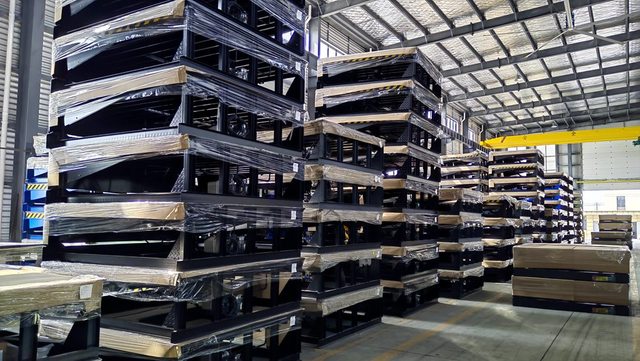
Long loading bridges and fixed boarding bridges need export-friendly packaging, lifting points, installation marks, and a clear bill of materials. Modular design helps reduce shipping complexity to Siberia and simplifies on-site assembly or pit installation.
Useful checkpoints include material verification, weld inspection, dimension control, hydraulic pressure testing, trial operation, safety edge checks, surface treatment review, and pre-shipment photos or videos. These records support E-E-A-T and reduce project risk.
Direct communication with the manufacturer can reduce ambiguity in customization, spare-part identification, and repeat orders. The goal is not merely a lower unit price; it is a lower total cost of ownership across delivery, installation, uptime, and maintenance.
The loading dock is becoming a data and safety node in the warehouse, not an isolated piece of steel equipment. These trends are especially relevant for large Novosibirsk distribution and cold-chain projects.
Vehicle restraints, door interlocks, warning lights, and leveler position sensors are increasingly specified to prevent drive-away accidents and forklift falls. Integrated safety logic is becoming a procurement differentiator.
Buyers are asking for better freeze resistance, protected hydraulics, anti-slip surfaces, condensation management, and service access that remains practical in winter. Snow and ice removal must be considered at the design stage.
Mobile loading bridges and modular fixed bridges serve temporary yards, cross-docks, construction sites, and multi-tenant facilities. They reduce civil works and allow assets to be repositioned as operations change.
Cold storage and heated warehouses pay attention to dock seals, shelter systems, door speed, and leveler fit. A poorly fitted dock bridge can become a thermal leak as well as a safety risk.
Sensor-ready designs, accessible lubrication points, standardized hydraulic components, and clear spare-part lists make maintenance more predictable. Remote diagnostics and QR-linked service documentation are emerging expectations.
Novosibirsk’s river and reservoir environments create demand for aluminum gangways, floating approach bridges, adjustable rubber connecting frames, and corrosion-resistant marina access systems alongside traditional warehouse equipment.
A localized solution is not a translated catalogue page. It is a configuration decision shaped by the site, season, vehicle mix, and operating discipline of the buyer.
High-frequency parcel and pallet operations need fast vehicle turnover, reliable hydraulic movement, and safe forklift transitions. A hydraulic dock leveler or fixed boarding bridge is often preferred where a pit or permanent dock face exists. For multi-shift operations, duty cycle and maintenance access matter as much as headline capacity.
Cold stores in and around Novosibirsk must protect temperature control while keeping loading efficient. Specify anti-slip surfaces, suitable seals and bumpers, protected controls, drainage planning, and a maintenance routine that accounts for ice build-up and condensation.
Factories may handle heavy crates, oversized components, and mixed trailer heights. Heavy-duty fixed loading dock bridges and adjustable ramps can reduce manual handling risk. The structural review should include forklift axle loads, dynamic impact, and whether the bridge is indoor, outdoor, or partially sheltered.
Project sites often lack a finished loading dock. Mobile hydraulic loading bridges and hand-cranked movable loading bridges can be repositioned as site layouts change. Ground bearing pressure, wheel chocks, approach gradients, and operator training are essential.
Around the Ob River and Novosibirsk Reservoir, marinas and water-access projects need floating bridges, aluminum gangways, handrails, and flexible connecting frames. Water-level variation, wave exposure, corrosion, and pedestrian safety drive the design more than warehouse load capacity does.
Where freight moves between rail, road, and warehouse, adjustable dock bridges can support temporary or semi-permanent transfer points. The buyer should define trailer types, operating frequency, surface conditions, and whether equipment will be moved by forklift or crane.
Large buyers rarely purchase one isolated product. They purchase a loading interface that must work with doors, vehicles, safety systems, traffic flow, and maintenance resources.
For a new distribution center, define door count, dock height, pit dimensions, trailer fleet, forklift types, expected throughput, and safety accessories. The package may include hydraulic dock levelers, dock bumpers, wheel chocks or restraints, door interlocks, and fixed boarding bridges for dedicated lanes.
Existing buildings often have constrained pit depth, uneven approaches, or older doors. A movable loading bridge or surface-mounted ramp may reduce civil works. The engineering review must confirm approach slope, load distribution, drainage, and safe operating space.
Mobile hydraulic loading bridges and forklift-compatible ramps support flexible yards, seasonal peaks, and temporary facilities. They are especially useful where multiple loading points share one asset or where the dock face changes over time.
For marina projects, the system is a chain of floating pontoons, adjustable connecting frames, aluminum gangways, handrails, and mooring details. Design should consider water-level fluctuation, pedestrian slope, corrosion protection, and inspection access.
Macro insight: The strongest supplier is not the one with the longest product list. It is the one that can translate a site brief into a coordinated equipment package with clear interfaces—building, vehicle, hydraulic, electrical, safety, shipping, and service.
International buyers sourcing for Novosibirsk usually evaluate more than the FOB price. They compare technical fit, documentation, delivery reliability, spare-part availability, and the risk of downtime during winter peaks.
Capacity range, platform size, adjustment stroke, voltage, control type, cold-climate suitability, installation method, and expected service life. For distributors, packaging, labeling, spare-part kits, and repeat-order consistency are also decisive.
Projects may require drawings, material lists, test records, operation manuals, maintenance schedules, and project-specific compliance review. For Russia and EAEU markets, final technical-regulatory requirements should be confirmed with the importer and local specialists before shipment.
Hydraulic seals, hoses, control components, and structural parts should be identifiable. A spare-part list with part numbers and photos reduces downtime. Remote troubleshooting, installation videos, and clear warranty terms support international buyers.
For a global enterprise buyer, the practical question is: which configuration keeps freight moving safely at the lowest lifecycle risk? That framing favors transparent engineering communication over a simple lowest-price comparison.
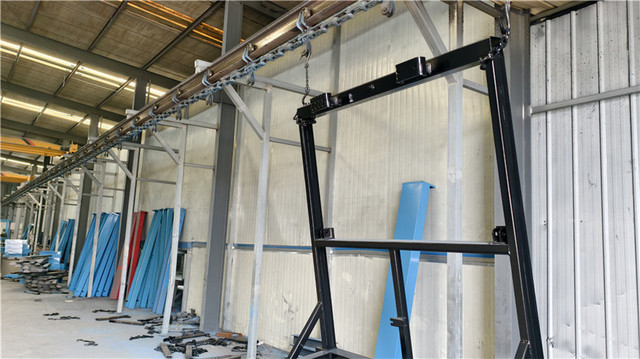
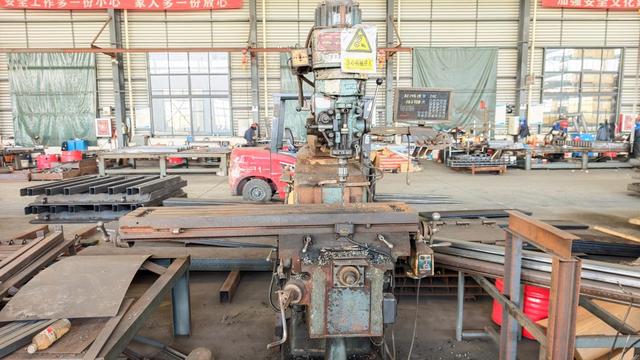
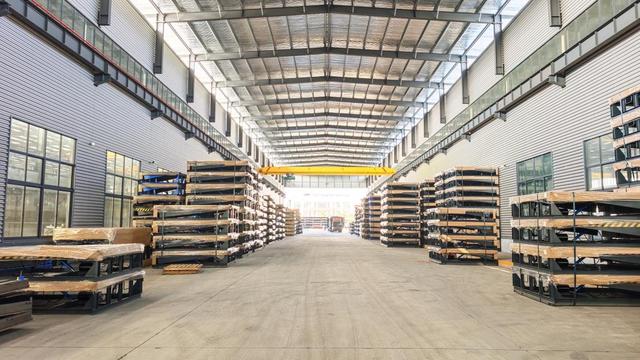
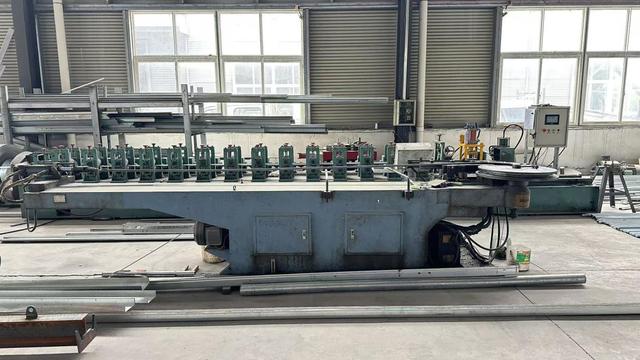
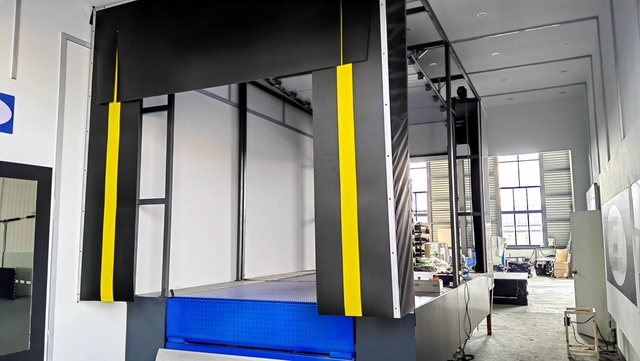
Manufacturer transparency is a core part of trust. The original company profile is retained below, followed by factory images and a practical explanation of how manufacturing authority supports Novosibirsk projects.
Dongguan Spare PartPro Co., Ltd. is a professional manufacturer specializing in hydraulic dock levelers and warehouse loading dock equipment, providing reliable and efficient material handling solutions for global logistics and industrial sectors. With a strong foundation in precision manufacturing and mechanical engineering, the company has developed into a trusted supplier of high-performance loading dock systems.
Spare PartPro focuses on designing and producing hydraulic dock levelers, loading platforms, dock safety accessories, and related warehouse equipment that improve loading efficiency and operational safety. Its products are widely used in logistics centers, distribution warehouses, manufacturing facilities, and cold chain storage environments.
Over the years, the company has continuously upgraded its production capabilities by integrating advanced hydraulic technology, reinforced structural design, and modern quality control systems. This ensures that every product delivers durability, stability, and long service life even under heavy-duty working conditions.
Committed to innovation and customer satisfaction, Dongguan Spare PartPro Co., Ltd. offers OEM and ODM customization services to meet diverse project requirements worldwide. The company follows strict international standards in design and manufacturing, ensuring consistent performance and safety compliance.
With a growing global presence, Spare PartPro continues to support the development of smart logistics infrastructure by delivering cost-effective, high-quality dock leveler systems that enhance warehouse efficiency and streamline supply chain operations.
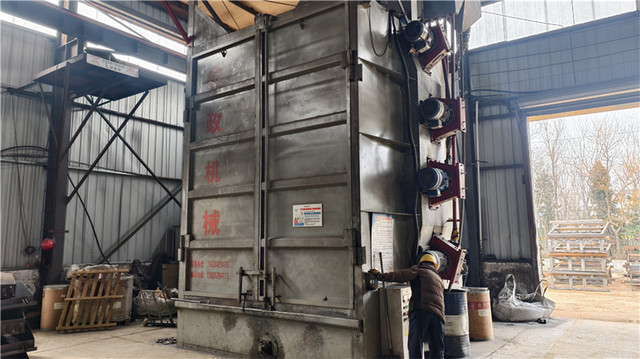
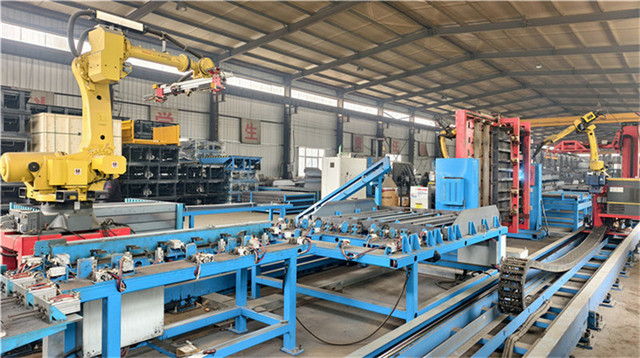
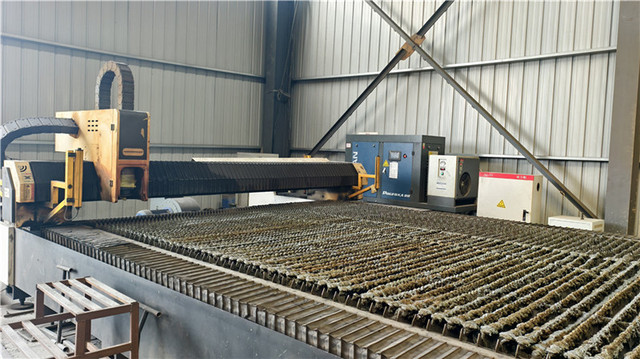

Reliability note: For international projects, product performance depends on correct specification, installation, operation, and maintenance. Buyers should request drawings, load assumptions, control details, packing lists, and project-specific compliance documents before ordering. Send Inquiry Now
These four catalogue configurations broaden the selection for buyers comparing movable ramps, marina access systems, and fixed boarding platforms.


Use this six-step sequence to move from a vague requirement to a quotation that can be compared fairly across suppliers.
Record dock height, trailer deck height range, door width, available pit, approach slope, and whether the equipment is indoor, outdoor, or exposed to snow and wind.
Include forklift weight, wheel load, pallet weight, maximum load, duty cycle, and any exceptional loads. Do not select capacity from a single nominal tonnage figure.
Clarify winter operating expectations, hydraulic oil and seal review, anti-slip needs, drainage, voltage, frequency, control voltage, and protection level.
Compare pit-mounted, surface-mounted, fixed, and movable options. Confirm civil works, lifting equipment, anchoring, drainage, and commissioning responsibilities.
Ask for drawings, operation manual, maintenance schedule, spare-part list, inspection records, packing list, and warranty terms. Confirm who supports installation.
Evaluate freight, installation, maintenance, downtime risk, and spare-part lead time alongside the unit price. A project-specific quotation is more useful than a generic price list.
RFQ data that accelerates a reply: site photos, CAD or sketch, dock height, trailer types, load capacity, voltage, indoor/outdoor use, required platform size, adjustment range, quantity, destination city, and required delivery window. Send Inquiry Now
Direct answers to the questions that most often appear in buyer emails, RFQs, and supplier comparison sheets.
An adjustable dock bridge—often a hydraulic dock leveler, mobile loading bridge, or boarding bridge—connects a loading dock or yard to a truck, trailer, container, or floating platform. Its height or slope is adjusted to bridge the gap safely, allowing forklifts and goods to move between the vehicle and the facility.
The right model depends on the site. Warehouse lanes usually use hydraulic dock levelers or fixed boarding bridges with cold-climate review, anti-slip surfaces, protected controls, and suitable hydraulic fluid. Temporary yards may prefer mobile hydraulic loading bridges. Marina projects need aluminum gangways and floating systems designed for ice-free operating seasons and water-level variation.
Yes, voltage, frequency, control configuration, cable arrangement, and protection details can be reviewed during quotation. Buyers should state the exact site electrical supply and control requirements so the factory can confirm the correct configuration.
Select capacity from the actual operating load: forklift weight, load weight, wheel load, dynamic impact, and duty cycle. The catalogue may list 6 t, 8 t, 10 t, 12 t, or 15 t options, but final selection should be based on engineering review rather than a single number.
For project orders, drawings and installation information can be prepared according to the confirmed configuration. Buyers should confirm pit dimensions, anchor details, drainage, approach conditions, lifting points, and local installation responsibilities before shipment.
Shipping method depends on size, quantity, and project schedule. Factory export packing, container loading, rail or road forwarding, and customs documentation should be coordinated with the buyer’s freight forwarder. Modular design helps reduce handling complexity.
Spare-part planning should include hydraulic seals, hoses, control components, bumpers, and other wear items. A clear spare-part list with identifiers helps distributors and end users maintain uptime. It is best to discuss a recommended spare kit with the quotation.
Compliance requirements depend on the exact product, configuration, application, and importer. The project should be reviewed against applicable technical regulations with the importer and local specialists. Documentation and marking should be confirmed before ordering; a generic catalogue claim is not a substitute for project-specific review.
Lead time depends on model, customization, quantity, inspection requirements, and shipping schedule. Standard configurations are usually faster than fully customized cold-climate or marina systems. The quotation should state production, inspection, packing, and estimated dispatch timing clearly.
Send site photos, dock height, trailer types, load requirements, voltage, indoor or outdoor use, operating temperature expectations, quantity, and destination. The factory can then recommend a configuration and prepare a focused technical-commercial quotation. Send Inquiry Now.
Share your dock height, vehicle fleet, load profile, winter conditions, and installation constraints. Get a factory-direct configuration review instead of a generic price list.
The final eight original catalogue configurations cover heavy-duty fixed docks, truck and trailer loading bridges, aluminum gangways, pit loading bridges, hand-cranked movable bridges, floating marine structures, and forklift-operable mobile loading bridges.


All original product URLs and images have been retained for direct inquiry. For configuration review, project drawings, and export packing discussion, Send Inquiry Now
 Spare PartPro